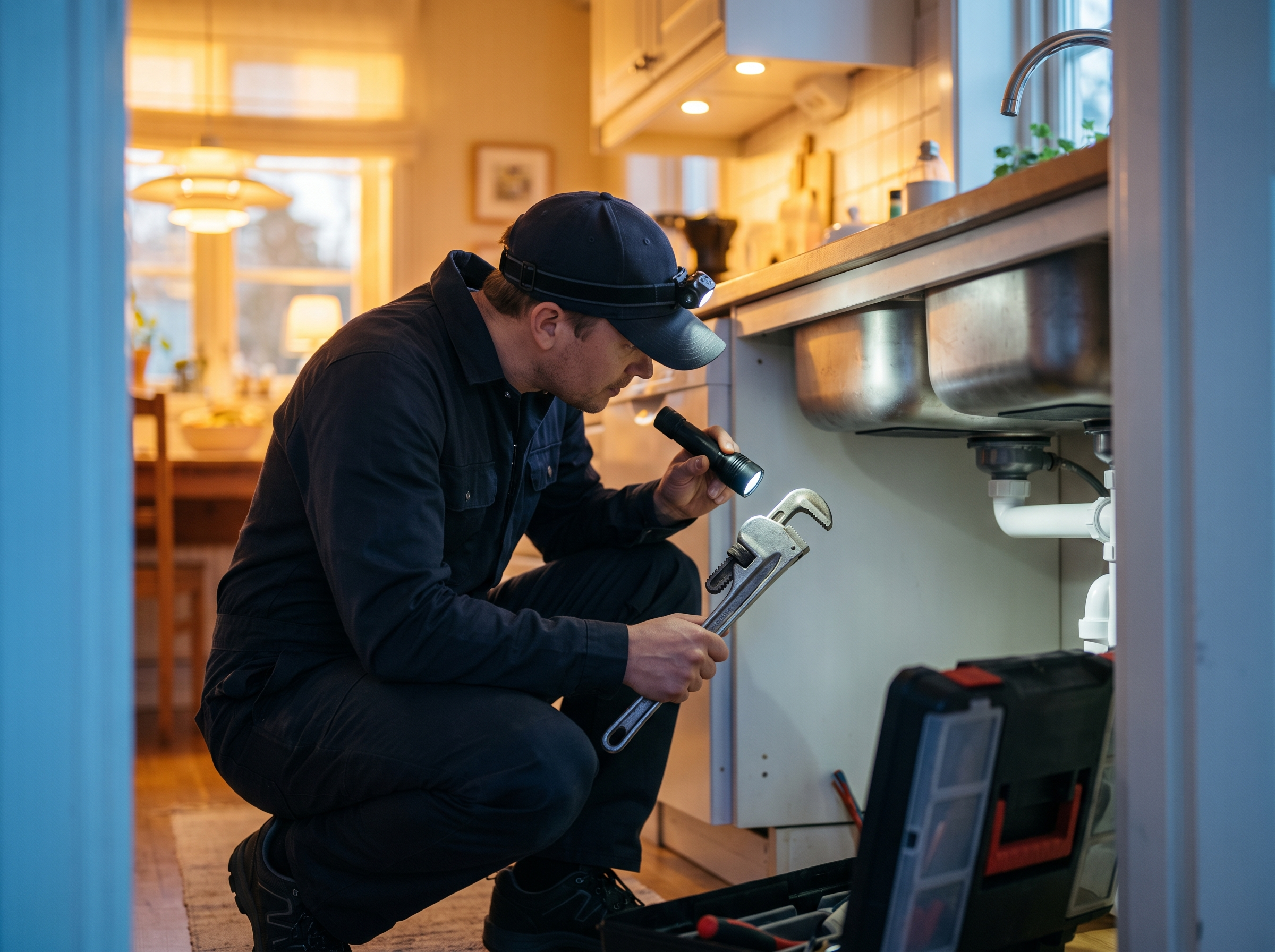
The problem in plumbing
Plumbing searches split into two very different moods. One is panic: "emergency plumber near me," "water heater leaking," "sewer backing up into basement." The other is research: "tankless water heater cost," "repipe house with PEX," "replace galvanized pipes." The panic searcher wants a phone number right now. The researcher wants to know you've done this job before and roughly what it involves.
Most plumber websites serve neither well. A single services page lists twenty things in a bulleted wall. The phone number is in the header in small type or hidden behind a menu on mobile. There's one "service area" paragraph listing towns, which does almost nothing to help you show up when someone in a town ten miles from your shop types "plumber" into Google.
Common gaps we see:
- No dedicated pages for high-value work like water heaters, repipes, sewer line repair or well pumps
- Nothing that tells a searcher in the next town over that you work there
- Contact forms that ask for eight fields when the caller just wants a call back
- Slow pages loaded with stock photos of smiling plumbers who don't work for you
What we build for plumbing companies
- A mobile-first layout with a sticky click-to-call button. The number follows the visitor down the page on phones, and the form is short: name, phone, town, what's going on.
- Emergency and scheduled paths. A clear "Plumbing emergency? Call now" section for urgent visitors, separate from an estimate request for planned work like fixture upgrades or bathroom rough-ins.
- One page per core service. Drain cleaning, water heater repair and replacement, tankless installs, repiping, sewer and main line work, sump pumps, gas lines if you're licensed for them. Each one explains the problem, the usual fix, what affects cost and what to do before you arrive.
- A page for every town in your coverage area. Written for that town, mentioning the housing stock and the kinds of jobs you see there, not the same paragraph with the town name swapped.
- Real photos and short job write-ups. Before and after shots of a water heater swap or a cleaned-up mechanical room do more than stock imagery.
- Fast, clean code. Page speed matters both to a frustrated visitor and to local rankings, which we cover in website speed and local rankings.
- CRM and tracking hookups so every form fill and call from the site lands in your pipeline with its source attached.
How it works
- Discovery. We go through which jobs you want more of, which towns you actually drive to and what sets you apart.
- Design. We design around a phone screen first, since that's where most plumbing searches start.
- Build. We write and build every service and town page, including the copy.
- Launch and grow. We connect it to your CRM and tracking, then add pages as you add services or towns.
What to look for (even if you don't hire us)
Use this list on your current site or on any designer's proposal:
- Open your site on your phone. Can you call the business in one tap without scrolling?
- Does each of your top five services have its own page with its own title?
- Do you have town pages, and does each one say something specific to that town?
- Does the site state your license number and the hours you actually answer?
- Does the form ask only for what you need to call back?
- Does the designer write the copy, or are you expected to supply it?
- Will form fills go to your CRM or just to an inbox someone forgets to check?
Our post on local SEO for plumbers explains how the site, your Google Business Profile and reviews work together.
Build a site that rings the phone
Our Web Design service builds plumbing sites with service and town pages included as standard. See how it fits with the rest of our work for plumbing companies, or read why trade businesses need local service pages first.