The problem in masonry
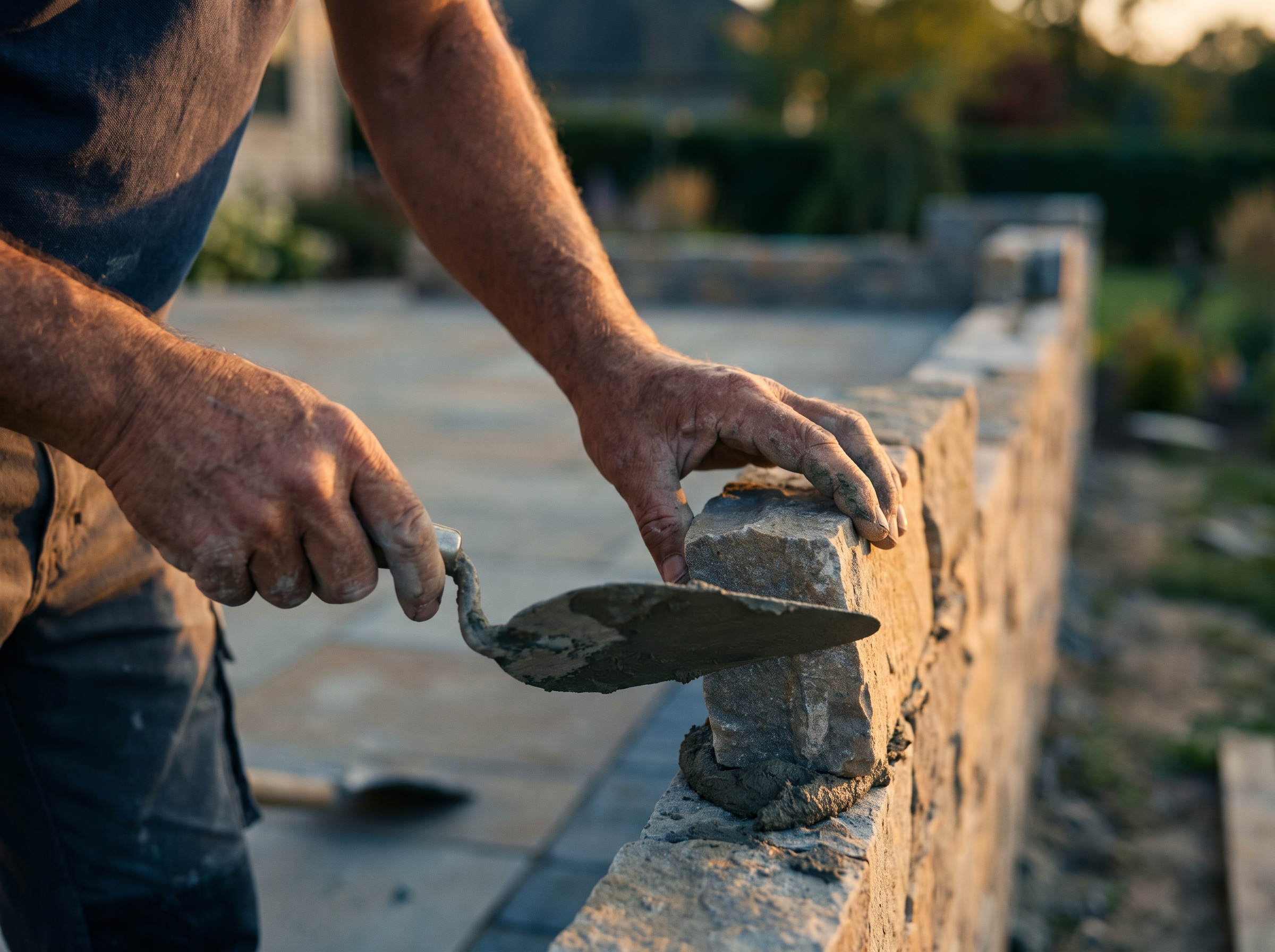
Masonry has an odd marketing gap. The work itself is some of the most photogenic in the trades: a granite step set true, a fieldstone wall with tight joints, a rebuilt chimney with fresh flashing. Yet most of those photos live in the owner's camera roll, with a few posted to Facebook and then buried.
That matters because masonry buyers shop slowly and visually. A homeowner pricing a paver patio or retaining wall is buying something that will sit in their yard for decades, and they pick largely on whose finished work looks like what they want. A logo and a stock photo of bricks loses to a site with twelve real patios on it.
There is also a search problem. People type specific things: "chimney repointing near me," "stone retaining wall contractor," "granite steps installer" plus a town name. A one-page site cannot rank for all of those. And when a real estimate request does come in through a generic contact form, it often arrives with no address, no photos and no sense of size, so you burn a site visit finding out it was a 6-foot walkway repair.
What we build for masonry contractors
- Service pages for each type of work. Patios and walkways, retaining walls, chimneys, steps and stoops, stone veneer, outdoor fireplaces. Each one covers your method, materials and the questions buyers ask, like when a chimney needs a rebuild instead of repointing.
- Project pages, not just a gallery grid. Each featured job gets its own short write-up: the town, what the homeowner wanted, the stone or block used, and before and after photos. This is the kind of page that wins a comparison shopper. Our post on building a project gallery for hardscaping and masonry goes deeper on how to shoot and organize them.
- Town pages for your service area. A page for each town you work in, with the kinds of jobs you do there and local projects where you have them, so you show up when someone searches with a town name.
- An estimate request form built for big jobs. Fields for job type, rough dimensions, address, timeline and a photo upload, so you can triage before you drive out.
- Click-to-call and site visit booking on every page.
- A fast, mobile-first build. Big photo galleries slow sites down, so images are sized and compressed properly and the code stays lean.
How it works
- Discovery. We go through the jobs you want more of, the towns you cover, and what sets your work apart, whether that is natural stone, chimney restoration or full outdoor living builds.
- Design. We design around your photos and your brand, laid out so the work is the first thing a visitor sees.
- Build. We write and build every service, project and town page, including the copy.
- Launch and grow. We connect the forms to your CRM and tracking, then keep adding project pages as you finish jobs worth showing.
What to look for (even if you don't hire us)
- Can the designer give each service its own page, with its own photos, rather than one "Services" page with a bulleted list?
- Will they write project pages with real detail, or just drop photos into a slider?
- Does the estimate form ask for the address, the job type and photos?
- Do they compress images and test load speed on a phone?
- Who owns the domain, the hosting account and the photos when you part ways?
- Will the site have a page for each town you serve, written for that town rather than with the name swapped in?
Get a site that sells the work
RGS builds websites for trade businesses with service, project and town pages written for the way homeowners shop. See how we approach masonry contractors more broadly, or read about following up on estimates once those requests start coming in. Call (617) 877-5608 or contact us to talk through your site.