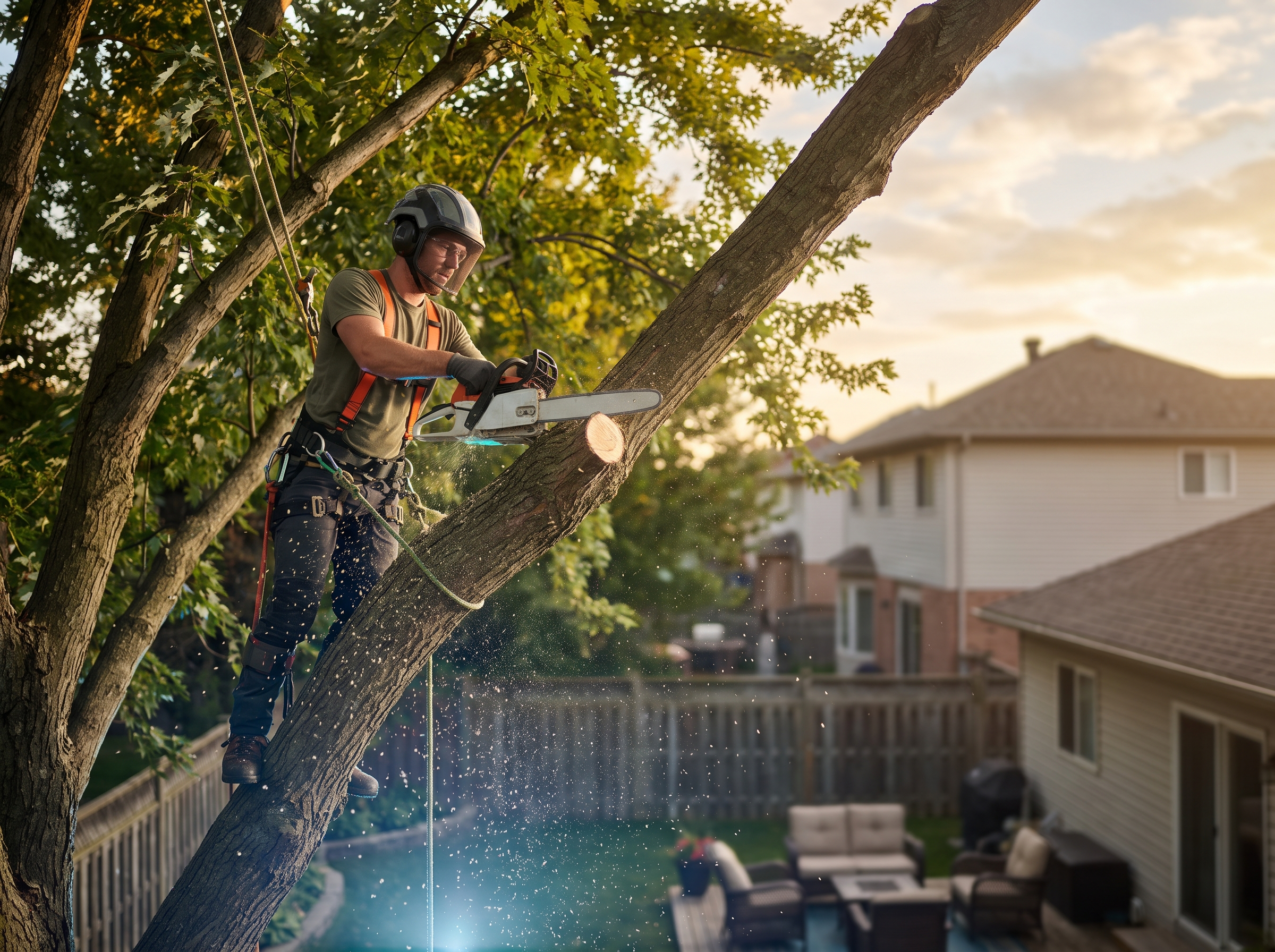
When a nor'easter drops limbs on cars and roofs, the people searching for help aren't comparing five tree companies over a week. They call the first two or three that look legitimate and pick up. This guide covers what to set up before storm season, how to handle the spike while it's happening, and how to keep the work coming afterward.
Why storm demand works differently
Routine tree work is a planned purchase. A homeowner gets three quotes and decides next month. Storm work is a panic purchase: a tree is on the house, the driveway is blocked, or a big limb is hanging over the kids' play area.
That changes what wins:
- Speed beats price. The company that answers and gives a clear next step usually gets the job.
- Trust matters more than usual. Homeowners are nervous about strangers with chainsaws, and for good reason (more on that below).
- The window is short. Demand can spike for a day or two and then trail off over a few weeks as the leaners and cleanup work come in.
Here's why a missed call hurts so much. Say an emergency job averages $1,800 and six calls go to voicemail on the first storm night. That's $10,800 in work that went to whoever picked up. If you want the general version of this math, see the cost of a missed call.
Before the storm: the prep checklist
You can't build any of this once the wind is blowing. Do it in the quiet weeks.
- Clean up your Google Business Profile. Pick the right primary category, list your services (removal, storm cleanup, stump grinding, crane work), set your service area honestly, and add real photos of your trucks and crews. Our Google Business Profile checklist for contractors walks through each field.
- Plan your storm hours. Google's help pages say you can set special hours for days when your schedule is unusual, such as holidays or special events. A third-party guide notes special hours work for changes of up to six days in a row, and another says Google reviews changes before they go live. So update hours when the forecast turns, not after the first call. Sources: Google Business Profile Help, Luau Group, Lilach Bullock.
- Start Local Services Ads verification early. As of 2026, tree services appear on Google's list of eligible home services (Google). But you must pass Google's screening before running ads, and that can include background, business registration, insurance and license checks (Semrush). Paperwork takes time, so file it in September, not during the storm. We compare the options in Google Local Services Ads vs. Google Ads.
- Write your texts and call script ahead of time. You'll want an after-hours greeting, a missed-call text, and a short list of intake questions. Details are below.
- Decide your ad budget rules now. Pick a weekly cap, who can raise it, and what triggers it, so nobody is guessing at 11 p.m.
Build one emergency page, not a vague services page
Most tree company sites bury storm work in a general "Services" list. Give emergency work its own page. This is the kind of page type we cover for the trade under web design for hardscaping and tree service companies.
What goes on it:
- A tap-to-call button at the top, visible on a phone without scrolling.
- A short safety box: if anyone is hurt or a tree is touching power lines, call 911 and the utility first. OSHA's tree-care guidance, as summarized by PermitDeck, says to treat all power lines as energized and stay at least 10 feet away.
- The situations you handle: tree on a house, tree across a driveway or road, hanging limbs, fence and shed damage, debris hauling.
- Your service area, in towns, not "all of New England."
- How quoting works: photo upload or text, then an on-site look. Be honest about when you can get there.
- Your credentials, stated accurately. The Massachusetts Arborists Association says Massachusetts has no licensing requirement for arborists (MAA). List what you actually hold, such as insurance, a Massachusetts Certified Arborist on staff, or an ISA credential, and don't blur the line.
Don't promise "30-minute response" unless you can hit it in the worst weather. A promise you break is worse than none.
During the storm: answer, triage, text
Make sure every call gets answered
LSA ranking guides, like this one from Hawksem, say Google weighs review quantity and rating, responsiveness to leads, proximity, business hours and availability, among other factors. These are third-party summaries, so treat the exact weighting as unknown. The practical point holds anyway: unanswered calls cost you the job and probably hurt your visibility too.
Be careful with hours. Only mark yourself open around the clock if it's true, because inaccurate 24-hour hours can lead to "closed" edits and hurt trust. If your crews are on chainsaws, you need someone else on the phone. Options:
- A dispatcher or family member on a storm rota
- Call forwarding with a ring order (owner, then office, then a backup)
- A human answering service or an AI receptionist that captures the basics. See AI receptionists for contractors.
- A missed-call text-back so no caller is left in silence
If you text customers from a business number, get your registration sorted well before storm season. Our guide to A2P 10DLC texting registration covers it.
Triage with the same five questions every time
| Situation | Priority | What your intake should do |
|---|---|---|
| Anyone hurt, or tree on or touching power lines | Highest | Tell them to call 911 and the utility. Don't send a crew into live lines. |
| Tree on the house, active damage | High | Get the address, photos and insurance contact. Offer a tarp or emergency stabilization if you do that. |
| Driveway or road blocked | High | Get photos and say when you can look. |
| Hanging limb or leaner | Medium | Book a slot in the next few days. |
| Cleanup, stump, debris haul | Normal | Quote and schedule after emergencies. |
Ask for the address, a photo by text, what the tree is touching, whether it's blocking access, and the best callback number. A tree service that sounds organized on the first call looks more trustworthy than one that's merely fast. For more on response speed, read speed to lead for home services.
Run ads with guardrails
If you run Google Ads alongside LSAs, keep the geography tight to the towns you can reach. Use an ad schedule that matches who can answer. Add negative keywords so you don't pay for "tree removal jobs," "tree cutting course" or "how to cut down a tree." Raise the budget only if you can still answer every call. Extra spend into an overloaded phone line is just more missed calls.
Don't look like a storm chaser
After big storms, scammers show up. The Black Hawk Tree company lists these red flags: unsolicited door-knocking right after a storm, big cash deposit demands, no local address or marked vehicles, and refusing to show a certificate of insurance (source). A South Carolina Attorney General's tip sheet adds that homeowners should verify insurance directly with the insurer and be wary of crews following storms from out of state (source).
Your marketing can show you're the opposite:
- Put your real local address, marked trucks and crew photos on your site and profile.
- Say you'll send a certificate of insurance on request, and mean it.
- Write quotes that spell out what's included. One consumer guide tells homeowners to ask whether the price covers removing the tree, the stump, hauling limbs and debris, and any crane (source).
- Skip "free inspection" door hangers. They look like the scam.
- Be upfront that emergency work costs more than routine trimming. PermitDeck notes that off-hours labor, hazardous conditions and heavy equipment all cost more, and explaining that up front heads off price arguments.
Reviews carry most of the trust load here. Ask every storm customer for a review within a day or two, while they're still relieved. See turning Google reviews into marketing.
After the storm: where the second wave of jobs comes from
The emergency calls are only the first wave. In the following weeks, you'll get leaners, cracked limbs, stump grinding, fence repairs and homeowners who finally want that risky oak looked at.
- Follow up on every quote. Storm estimates go cold fast. Use a short text and call sequence like the one in estimate follow-up for contractors.
- Text your past customers with a plain "is everything okay after the storm?" message and an offer to inspect trees. See reactivating past customers by text.
- Track where calls came from (LSA, Google Business Profile, ads, referrals) so next year's budget isn't a guess. Tracking your lead sources shows how.
- Keep leads in one place. If storm jobs live in texts, voicemails and sticky notes, some will get lost. The CRM for hardscaping and tree service companies page covers how a pipeline can handle that, and so does automation for tree and hardscaping businesses.
How RGS can help
Revenue