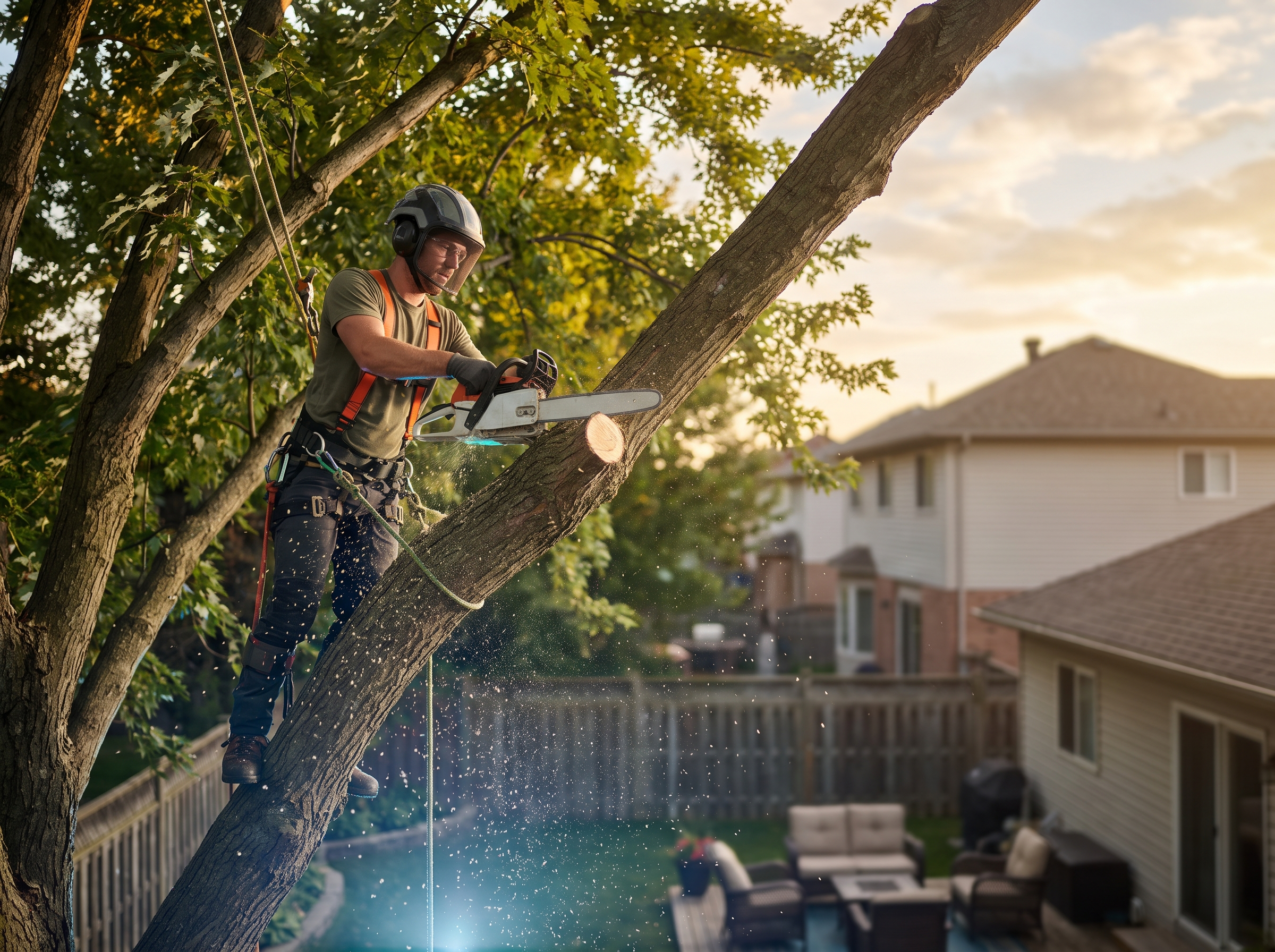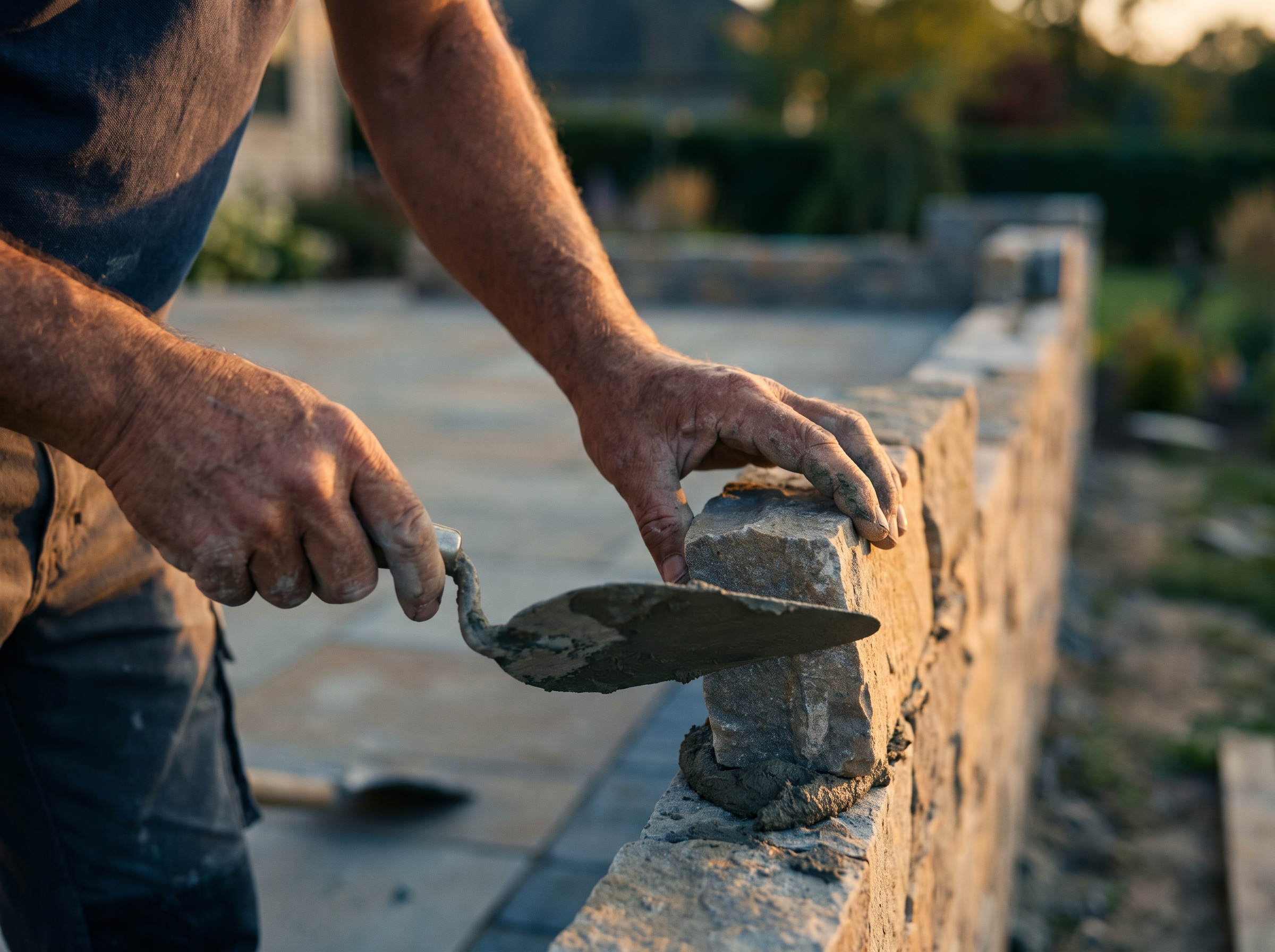
A homeowner who needs a tree taken down next to the house is making a risky decision with very little information. They can't judge your rigging or your saw work, so they look for proof that you're a safe, legitimate company. This post covers the tree service website trust signals that matter most and how to show each one honestly.
What homeowners are really checking
Most people searching for tree work are asking three questions before they ever call. Will you damage my property? Who pays if someone gets hurt? Are you the real thing, or a truck with a magnet sign that disappears after storm season?
Your website is where you answer those questions before the phone rings. A site with no mention of insurance, no named people and no credentials forces the homeowner to guess. Many will call the company that didn't make them guess.
Trust signals work best when they are specific and checkable. "Fully licensed and insured" appears on nearly every tree site, so it carries little weight. A named Massachusetts Certified Arborist, a stated coverage type and a link to the lookup tool carry more.
Insurance: say what you carry and make it easy to prove
Two coverages matter to a homeowner. General liability protects the customer's property against damage during the work, and workers' compensation covers a crew member injured on the property.
In Massachusetts, workers' compensation is mandatory for every employer with one or more employees, and the Department of Industrial Accidents administers it. That makes it a fair question for any homeowner to ask. The state also offers a public lookup: you can find out whether any business in Massachusetts currently has workers' compensation insurance on the Mass.gov workers' comp check page. One caution from the state itself: an empty search result doesn't prove a business is uninsured, since coverage may be under a different business name or a self-insurance arrangement. Make sure your policy is listed under the name on your website and your truck.
How to show insurance on the site:
- State both coverages in plain words, for example "General liability and workers' compensation coverage."
- Offer a certificate of insurance on request. A certificate should come from the insurer and show current coverage with a company name that matches.
- Don't publish policy numbers, and don't post a PDF you won't update every renewal.
- If you're a solo operator with no employees, say what you do carry. Don't borrow language that implies a crew policy.
Licensing: what Massachusetts does and doesn't require (as of 2026)
This is where tree companies get into trouble, either by overclaiming or by hiding what they really hold. Here is the picture for Massachusetts as of 2026. This isn't legal advice, so confirm details with the agencies linked below.
- No state arborist license. The state's forestry licensing rules don't require a license for people working as tree wardens, arborists, utility foresters and similar roles. The Mass.gov forestry licensing guide also says anyone who practices forestry and holds themselves out as a forester needs a Forester License. Don't call yourself a forester unless you hold that license.
- Pesticide work is licensed. Anyone applying pesticides in public areas and private places where people live needs a valid license or certification from the Massachusetts Department of Agricultural Resources. If you offer spraying or plant health care, list your applicator license. MDAR's tree and shrub consumer bulletin tells homeowners that commercial applicators must hold a valid Pesticide Applicator License.
- Home Improvement Contractor (HIC) registration may apply to hardscaping. Contractors who solicit, bid on or perform work on an existing owner-occupied property of one to four units must be registered. The state's exemption list includes landscaping, freestanding masonry walls, ground-level patios and driveways. Whether your scope falls inside or outside is a question for the state's HIC homeowner resources. If you're registered, show the number. A homeowner with an unregistered contractor isn't protected by the Home Improvement Contractor Law.
- Local permits are separate. Many municipalities require permits for removals above certain trunk diameters, especially near wetlands, public ways or locally protected trees. A short "we help with permit questions" note on your site shows you know your town.
Use the word "licensed" only for a license you can name. "Pesticide applicator license no. ___" beats a vague claim.
Credentials: what each one means and how to display it
Because tree work has no state arborist license, the voluntary credentials carry most of the weight. Here is what each one proves.
| Credential | Held by | What it shows | How homeowners can verify |
|---|---|---|---|
| ISA Certified Arborist | A person | Passed the International Society of Arboriculture exam, renewed every three years | ISA's public directory at treesaregood.org |
| Massachusetts Certified Arborist (MCA) | A person | Passed the Massachusetts Arborists Association exam, plus annual continuing education | MAA's Verify an MCA list |
| TCIA Accreditation | A company | Voluntary third-party audit of safety, training and business practices | Call TCIA's accreditation department |
The facts behind the table:
- ISA. The credential belongs to the individual, not the company. It expires every three years unless the holder retests or logs continuing education. ISA runs a Find an Arborist directory that the public can use to verify credentials. That tool checks knowledge only. ISA has no view into whether a person or company carries general liability or workers' compensation.
- MCA. The MCA is a voluntary program started in 1957 by leading Massachusetts arborists. MCAs must earn ten continuing education credits each year. The MAA verification page lists current MCAs and leaves off retired, former or expired ones.
- TCIA. TCIA Accreditation is a voluntary company credential, described as a third-party consumer confidence program. If you hold it, say so. Don't claim it casually. TCIA publishes a page of companies that falsely claim accreditation and says homeowners can call its accreditation department at (800) 733-2622 to check. See TCIA's logo violators page.
When you display a credential, name the person. "ISA Certified Arborist on every estimate" is only true if it is. "Our crew includes a certified arborist" is the kind of line homeowners learn to distrust. Put the person's name, photo and credential number on the team page and make sure the credential is current.
Where to put trust signals on the site
Spread them out instead of burying them on an About page nobody reads.
- Header or top of the homepage. One line with your town, your phone number and your strongest credential.
- Next to the estimate form. A short note such as "Insured crew, free written estimates, certificate of insurance on request" sits where people hesitate.
- Each service page. Removal, pruning, stump grinding and retaining wall pages should each carry the credentials that apply to that work. A removal page should mention insurance and rigging, and a spraying page should list your applicator license.
- Team page. Names, faces, roles, credential numbers and years of experience you can document.
- Project gallery. Real jobs in real towns, with a short note on the access problem you solved. The hardscaping and masonry gallery guide covers how to build one that earns trust.
- Reviews. Pull real Google reviews that mention the crew, cleanup and property protection. See turning Google reviews into marketing.
- Emergency page. Storm and after-hours visitors are the most wary. The emergency tree removal marketing guide shows how to handle that page.
Keep your Google Business Profile consistent with the site. If the profile says one thing about services and the site says another, that mismatch looks sloppy. Our Google Business Profile checklist walks through the fields to match.
Trust mistakes that cost estimates
- Badge clutter. A row of generic seals with no names or numbers looks like decoration.
- Expired or unverifiable claims. Audit the page every renewal. If a credential lapses, remove it that day.
- "Certified" with no name. Say who is certified and in what.
- Hiding insurance behind a phone call. Say you carry coverage, then offer the certificate.
- No faces. Homeowners let crews onto their property. Show the crew leader.
- Overclaiming on hardscaping scope. Don't imply a license covers work it doesn't.
A quick audit: open your site on your phone and look for your insurance statement, a named credential and a real project photo within the first two screens. If any is missing, that's your to-do list.
How RGS helps
If you want these trust signals built into the pages that bring in your estimate requests, our web design service covers sites for local service businesses. We also have a page on web design for hardscaping and tree service companies and an overview of the hardscaping and tree service industry. If you're comparing designers, read how to hire a web designer for your trade business first, then contact us or call (617) 877-5608.