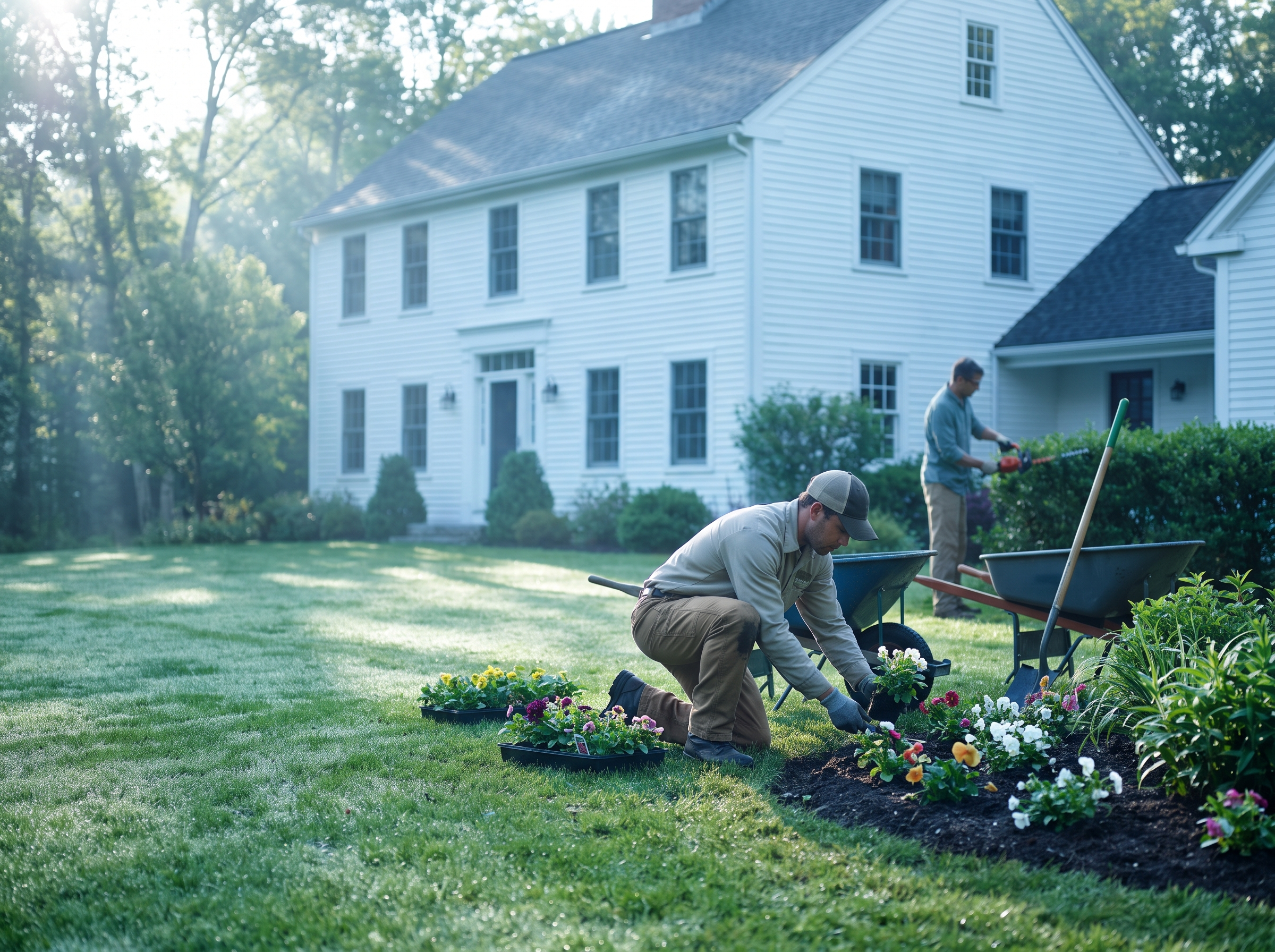
The problem in landscaping
Landscaping marketing goes wrong in a few predictable ways. The most common is spending the same amount every month. Demand in New England is wildly seasonal: maintenance and cleanup searches surge in early spring, installs and lawn renovation have their own windows, leaf cleanup peaks in October, and snow contracts get signed in the fall. A flat monthly budget overspends in the dead weeks and runs dry in the rush.
The second is geography. A maintenance account is only profitable if it fits a route. Ads aimed at a 25-mile radius bring in calls from towns your crews never visit, and each one is either a wasted lead or a money-losing stop. Meanwhile the street where you already cut six lawns has neighbors who would sign today if they saw your trucks and your name online.
The third is mixing goals. A campaign that tries to sell weekly mowing and a $25,000 backyard redesign with the same ad does neither well. Design/build buyers need to see a portfolio. Maintenance buyers want to know you serve their street, what it costs, and when you can start.
What we build for landscaping companies
- Seasonal campaign calendars. Google and Meta campaigns that switch on, scale up and pause around the season for each service: spring cleanups, maintenance contracts, installs, fall cleanups and snow. Our landscaping seasonal marketing calendar walks through the year.
- Route-dense targeting for maintenance. Ads limited to the towns and neighborhoods where you already run crews, so new accounts fill gaps instead of adding drive time.
- Design/build campaigns built on your projects. Meta ads using your own finished landscapes, and Google ads for searches like "landscape design" and "lawn installation," sent to portfolio pages with a consultation offer.
- Google Business Profile management. Correct categories and service areas, photo posts of recent installs tagged by town, and a steady flow of review requests after completed work.
- Local Services Ads where your category is offered. Availability varies by category and market, so as of 2026 we check eligibility in your area before including it.
- Programmatic town and service pages that keep pulling organic traffic between ad seasons.
- Reporting tied to signed contracts. Each lead tracked into your CRM so you can see cost per signed maintenance account and per design/build deposit, by campaign.
How it works
- Audit. We review your ad accounts, your Business Profile, your site and last year's lead and sales history to find the quickest wins.
- Build campaigns. We set up campaigns for each service season, aimed at your route towns and your best-margin work.
- Launch and track. Campaigns connect to your CRM so every lead is followed from click to signed contract.
- Optimize monthly. We shift budget with the seasons, cut what isn't producing signed work, and add towns as routes expand.
What to look for (even if you don't hire us)
- Does the agency plan budgets by season, or quote one flat monthly figure?
- Can they limit maintenance ads to specific towns you choose?
- Are design/build and maintenance run as separate campaigns with separate landing pages?
- Do they use your project photos, and post them to your Business Profile?
- Do reports show signed contracts and revenue, or just clicks and calls?
- Will they tell you to pause spend in weeks when your schedule is already full?
Market to the towns your trucks already drive
RGS manages digital marketing for local service businesses, tracked from first click to signed contract. See our broader approach for landscaping companies, and pair campaigns with a landscaping website built to convert both kinds of buyers.