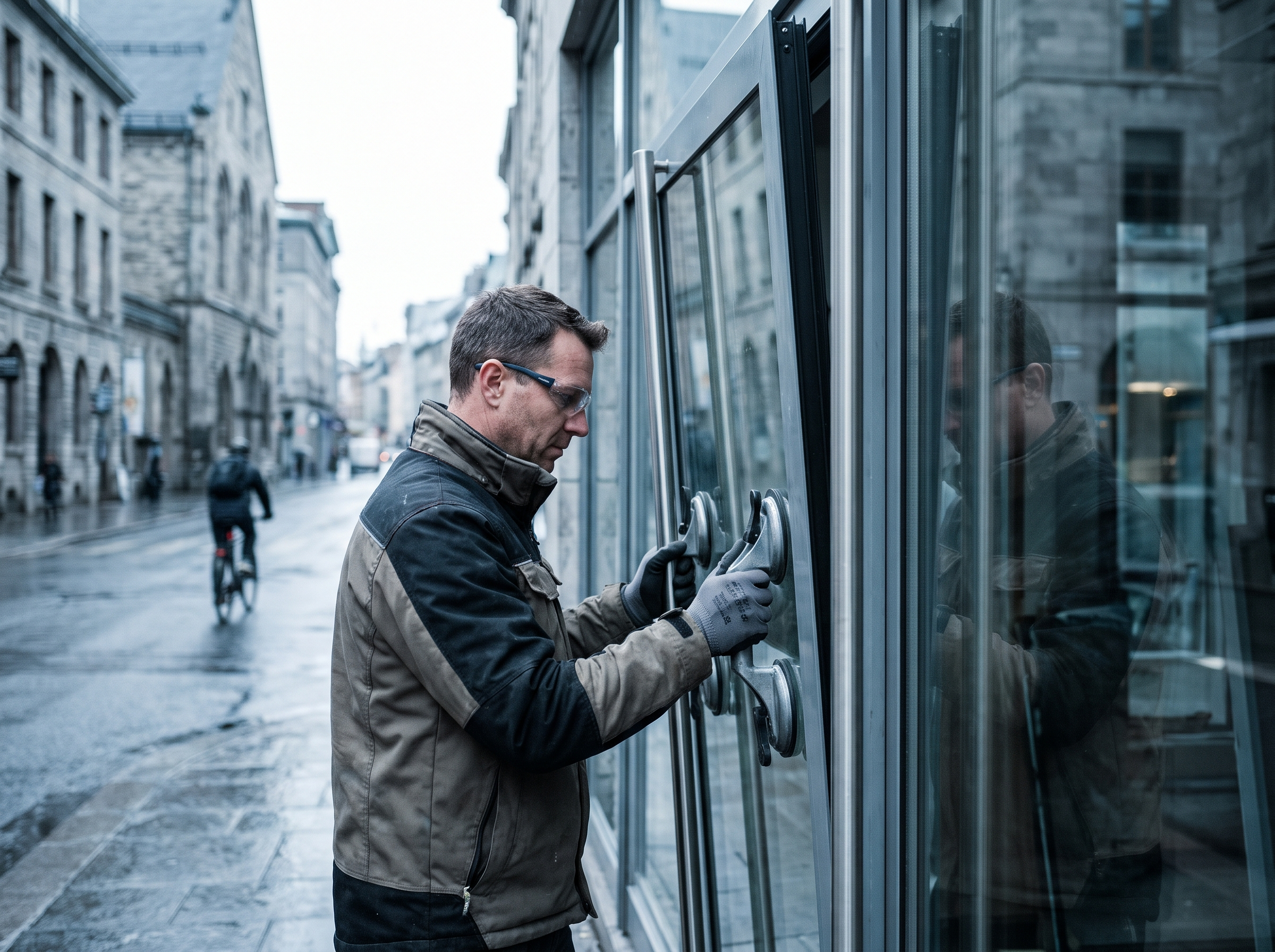
A cracked storefront pane at 11 p.m. or a tree limb through a bedroom window at 2 a.m. is not a problem that waits for a Monday morning call-back. The person searching has no time to compare, and they will call whoever picks up or answers first. This post covers how a glass and glazing company can catch those calls without putting the owner on the phone every night.
Why night calls are different for glass companies
Most glass emergencies share one trait: the caller wants the opening secured, not a perfect quote. Someone with a broken storefront wants the building closed up before they leave. A homeowner with a shattered window wants rain, cold or a break-in risk handled tonight.
That changes what a good response looks like. The first reply needs to say "we can come out" or "we can board it up now" and "here's what happens next." A price comes later.
It also means a missed call at night costs more than a missed call at 2 p.m. Say your average emergency board-up and follow-up replacement job brings in $900. If you miss three of those calls a month, that is $2,700 a month that went to the next listing. That number is a made-up example, so plug in your own average ticket and your own missed-call count from your phone records.
For the general version of this math, see the cost of a missed call.
Step 1: Decide what you actually promise at night
Before you buy any software, decide what your company will really do after hours. Automation can only deliver a promise you can keep. Pick one of these tiers, or run two of them.
| Tier | What you promise | Who it fits |
|---|---|---|
| Dispatch now | A tech or board-up crew heads out tonight | Companies with an on-call rotation and a truck stocked for it |
| Secure tonight, repair later | Board-up or temporary cover tonight, glass ordered next business day | Most small glass shops |
| Intake only | Call or form is captured and answered first thing in the morning | Shops with no night coverage |
Intake only is a legitimate choice. It just has to be described honestly everywhere, from your phone greeting to your Google listing. A caller who hears "we'll call you at 7:30 a.m." and gets that call is happier than one who was told "24/7" and got voicemail.
Step 2: Get the call answered or caught
You have four realistic ways to handle a night call. Most shops combine two.
- Forward to an on-call phone. Cheapest and simplest. It works if one person reliably answers, and it falls apart when they're asleep, driving or on another call.
- Live answering service. A person answers and takes a message. Make sure they have a script and know your service area, or you'll get unqualified calls forwarded at 3 a.m.
- AI receptionist. It answers, asks your intake questions, and sends you a summary. It's useful for shops that can't staff a night line. See AI receptionists for contractors for how to evaluate one.
- Missed-call text-back. If the call isn't answered, an automatic text goes out within seconds. Here's how to set one up.
Speed matters because the caller is probably dialing the next number on the list. Our guide on speed to lead for home services goes deeper on why.
Step 3: Ask the right questions in the first minute
Whether a person, an AI or a form is doing the intake, the questions should be the same. Keep them short, because the caller is stressed.
- What's your name and the best number to reach you?
- What's the address, and is it a home or a business?
- What broke: a window, a door, a storefront pane, a sliding door, a mirror?
- Is the opening secure right now, or is it open to the weather or to people?
- Is anyone at risk of injury from loose glass? (If yes, tell them to stay clear and call 911 if anyone is hurt.)
- Roughly how big is the opening, and can they send a photo by text?
- Is the glass double-pane, tempered, laminated, or do they not know?
- Is this an insurance claim, or are they paying directly?
The photo request is the most useful one. A picture of the damage lets you decide whether it's a truck-tonight job, a board-up job or a morning quote. It also helps you bring the right tools and material.
A sample text-back, written for a hypothetical shop: "Hi, this is [Company Name] Glass. Sorry we missed your call. Is the opening secure right now? Reply with your address and a photo of the damage, and we'll tell you the next step."
Step 4: Make your listings match your promise
People search "emergency glass repair near me" on their phone, usually from Google Maps. Your listing has to line up with what you actually do.
Hours. Google lets you set special hours for holidays and short-term changes. Hours should describe the operation customers can actually reach, and a voicemail box or web form that takes overnight messages doesn't make you open 24 hours. If you answer at night, say so. If you don't, don't claim it. Our Google Business Profile checklist for contractors covers the rest of the profile.
Services. List the real jobs you take at night, such as storefront glass replacement, emergency board-up and broken window repair. Keep your category tied to what the business is, not to the urgent keyword you want.
Local Services Ads. If you want paid placement at the top of the page, Google's Local Services Ads list auto glass repair as an eligible category, and Search Engine Land reported that the category list grew more granular as Google prepares to migrate LSA campaigns into Google Ads. Google's screening page also has a window repair category. Advertisers must have a public and verified Google Business Profile. Its verification requirements for window repair include general liability insurance and state-level business and owner licenses. As of 2026, eligibility depends on your category and area, so check your own account before planning around it. See Local Services Ads vs. Google Ads for the tradeoffs.
Your website. Put the phone number at the top of every page, with a tap-to-call button. Add a short "broken glass tonight?" form that asks for the address and a photo. A page that says what you do after hours, and what you don't, saves you from bad calls.
Step 5: Alert the right person and follow up
Capturing the lead is half of it. The other half is making sure someone sees it.
- Send an instant alert to the on-call person by text and email, including the caller's name, address, photo and summary.
- Set an escalation rule. If nobody acknowledges the lead in 10 or 15 minutes, alert a second person.
- Create a morning queue. Anything that came in overnight should be sitting in one list at 7 a.m., sorted by urgency, with a status for each.
- Send a confirmation text to the customer when someone claims the job: "Mike from [Company Name] is on the way, ETA about 40 minutes."
- Follow up after the emergency work. A board-up usually means a permanent replacement is coming. Send a reminder or a quote follow-up so you don't lose that second job to another shop.
That last step is where a lot of money gets lost. The emergency call is the first of two jobs. For storefront customers, it can also start a relationship with a property manager who has other buildings.
A CRM is the natural home for all this. See CRM pipeline stages for a service business for a stage layout you can adapt, with something like "emergency intake," "secured," "quote sent" and "scheduled."
Two legal checks before you automate
Don't skip these. They apply to almost any shop using automation.
Call recording. Many AI receptionists and call-tracking tools record by default. Massachusetts is an all-party consent state, and the law targets secret recording. If you operate in Massachusetts, you should inform all parties to a call that you are recording, unless it's clear to everyone involved. Read the Digital Media Law Project's summary, and add a short recording notice to your greeting or turn recording off. If you're not sure what applies, ask an attorney.
Texting. Automatic texts have two separate hurdles. The first is carrier registration. As of 2026, sending automated texts from a local 10-digit number generally means you fall under A2P 10DLC rules. Messages a human sends manually from a personal device don't require registration. The second is legal consent, which carrier approval doesn't cover. Carrier approval alone does not satisfy federal or state consent law. Read the A2P registration walkthrough before you switch on automatic replies, and keep your texts to the job at hand.
Test it at night
Before you rely on any of this, call your own number at 10 p.m. from a phone that isn't in your contacts. Then submit your own web form. Ask yourself:
- Did a person or a system answer, and did it match your promise?
- Did the text-back arrive within a minute?
- Did the on-call person get the alert, with the address and photo?
- Did the lead land in your CRM or job list?
- Would you trust it if you were the customer?
Run that test monthly. Phone forwarding, numbers and staff change, and a quiet failure at night can go unnoticed for weeks.
How RGS can help
RGS builds AI services and automations for local service businesses, including after-hours call answering, missed-call text-back and lead alerts. For glass shops, that can mean the intake questions, photo requests and morning queue described above. See AI automations for glass and glazing, our CRM work for glass companies and our glass and glazing page, or call (617) 877-5608 or contact us to talk through your setup.